EU – Western Balkans Media Literacy Conference 2025 in Skopje
The EU – Western Balkans Media Literacy Conference 2025 took place on 17 November 2025 in Skopje, North Macedonia, bringing together more than one hundred journalists, editors, fact-checkers, academics, civil society representatives, policymakers and diplomats from across the Western Balkans and the European Union. Organised by the Delegation of the European Union to North Macedonia and the European External Action Service (EEAS), the conference has grown into the flagship annual regional event dedicated to strengthening media literacy, building resilience to disinformation and foreign information manipulation (FIMI), and supporting a trustworthy information environment.
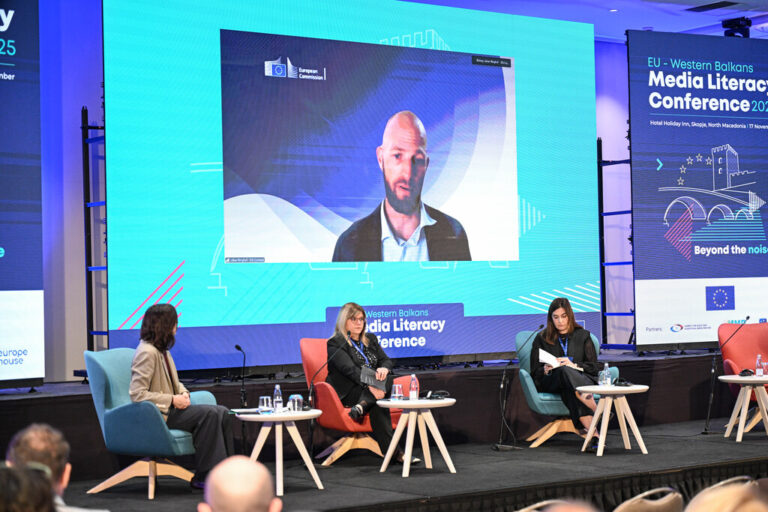
Photo: EU – Western Balkans Media Literacy Conference 2025
This year’s conference also marked the opening of Media Literacy Days 2025 in North Macedonia, held from 17 – 24 November. Through panels, interactive breakout sessions and workshops, participants addressed some of the most pressing challenges of today’s information landscape, including platform accountability, gendered and science-related disinformation, AI-enabled information manipulation, and the media habits and vulnerabilities of younger audiences. The programme reflected the EEAS commitment to information integrity and aligned with the theme of UNESCO’s Global MIL Week 2025: “Minds Over AI – MIL in Digital Spaces”.

Photo: EU – Western Balkans Media Literacy Conference 2025
At the panel “Social media platforms and (F)IMI: Part of the problem and part of the solution”, Maida Ćulahović, Policy Coordinator at Zašto ne, presented ongoing regional efforts to “translate” EU initiatives such as the Digital Services Act (DSA) into practice. She highlighted civil society-driven initiatives directed toward platforms, governments, and the EU, and stressed that DSA alignment requires more than legislative transposition – it demands a clear, systematic, and long-term strategy, which many Western Balkan countries still lack. Ćulahović emphasised that effective alignment cannot succeed without building a stronger ecosystem: oversight institutions need independence and real capacity, while civil society, research organisations and trusted flaggers must be supported and sustainable. She also pointed out the need for consistent guidance from the European Commission and a regionally coordinated approach, welcoming the fact that the newly presented European Democracy Shield extends many of its protections to EU candidate countries.
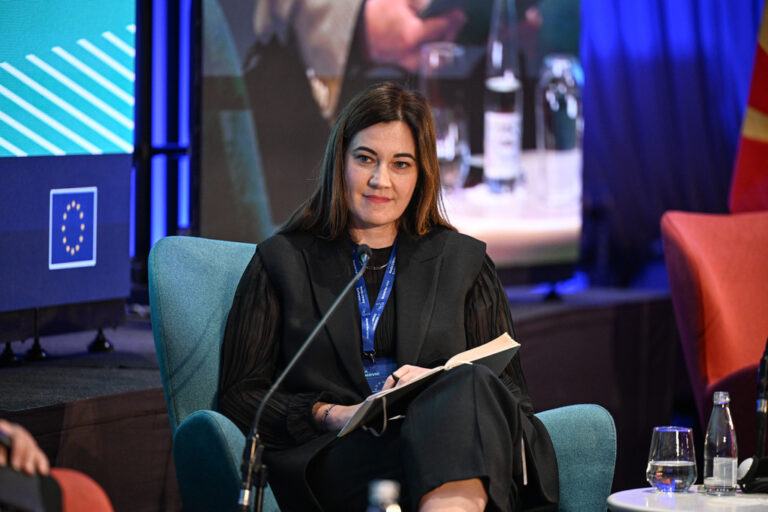
Photo: EU – Western Balkans Media Literacy Conference 2025
A key takeaway for the region came from Julian Ringhof of the European Commission’s DG Connect, who stated that supporting DSA alignment in candidate countries will be a priority in 2026. He emphasised that effective platform regulation will require strong civil society involvement, which will play an essential role in monitoring implementation and supporting future enforcement efforts.
Organised in partnership with the Europe House Network and Tactical Tech, the conference also featured the “AI & Us” exhibition, exploring the human-AI relationship and the role of emerging technologies in the modern information ecosystem. By connecting European and Western Balkan perspectives, the event reinforced shared democratic values and the need for an informed, resilient and inclusive media environment.