Call for Papers for the 4th SOS4Democracy Conference: “Democracy in Crisis: Possibilities for Resistance and Social Transformation”
The Social Sciences for Democracy project (SOS4democracy) invites you to submit paper abstracts for its 4th annual conference: “Democracy in Crisis: Possibilities for Resistance and Social Transformation”.
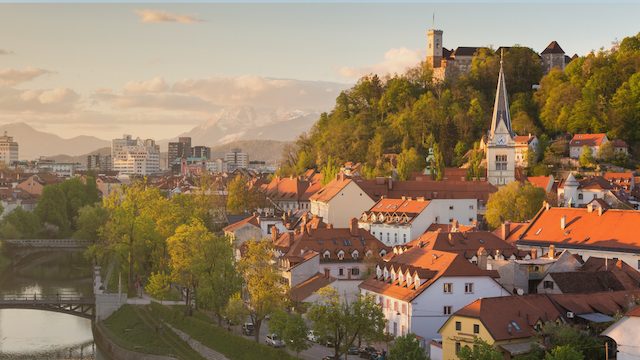
Photo by: SOS4democracy
Venue: Faculty of Law of the University of Ljubljana, Ljubljana, Slovenia
Dates: 16-18 June 2027
Abstract submission deadline: 15 February 2027
Call for papers
The Social Sciences for Democracy project (SOS4democracy) invites you to submit paper abstracts for its 4th annual conference: “Democracy in Crisis: Possibilities for Resistance and Social Transformation”.
Themes:
Contemporary liberal democracies are increasingly theorised as being in a state of crisis. Across democratic contexts, we observe the rise of populist politics, centralization of power in the executive branch, criminalisation of dissent, expanding practices of securitisation and surveillance, and continued impunity for violations of international law. At the same time, existing legal frameworks continue to be mobilized by social movements and other actors to challenge authoritarian practices, defend fundamental rights, and resist the normalisation of violence. This conference seeks to explore contemporary forms of authoritarian and illiberal practices, as well as the possibilities for resistance, solidarity, and the building of movements for social transformation.
We invite academic and non-academic contributions from diverse disciplines and fields of practice that address these and related questions through empirical, theoretical, and historical perspectives. Possible themes include:
- Illiberal systems and the centralisation of power: Authors are invited to explore measures through which governments centralise power within the executive branch, weaken judicial and legislative oversight, and undermine other mechanisms of accountability.
- The rise of populist politics: This theme explores the growing electoral and political influence of populist parties and movements, their mobilization around migration and national identity, and their impact on democratic institutions and political discourse.
- The limits of international law in times of remilitarization: Recent armed conflicts raise fundamental questions about the limits of the international legal order and the possibilities of mobilizing international and domestic law for political struggle and accountability. We invite contributions on how growing military spending, the shift of production and research towards defence, and the broader militarization affect democracy.
- Technology and the reshaping of democratic environments: This theme explores how surveillance, AI, and other emerging technologies are reshaping governance, from migration control, policing, and welfare administration to military and security infrastructures. Authors are invited to consider the implications of these developments for human rights, accountability, and democratic participation.
- Repression, securitization, and criminalization of dissent: We invite authors to explore the expanding use of policing, anti-terrorism measures, restrictive legislation, and institutional disciplinary measures to suppress political protest and social movements, including the growing pressures placed on universities, academic freedom, student activism, and journalistic freedom.
- Democratic resistance and civil society mobilization: This theme considers how civil society, social movements, opposition actors, and transnational networks mobilise to resist authoritarianism and political violence, including through monitoring and documenting illiberal measures, strategic litigation, public advocacy, investigative research, and other forms of civic oversight.
The conference welcomes researchers from the social sciences and humanities, practitioners, activists, students, and others engaged in research and advocacy on the rule of law, human rights, and fundamental freedoms in contemporary democracies.
Venue & accessibility:
The conference will take place over three full days from 16 to 18 June 2027 at the Faculty of Law at the University of Ljubljana, Slovenia. This will be an entirely in-person meeting with no option for virtual attendance or presentation.
General guidelines for abstract submissions:
- Submissions to the conference should include an abstract of a maximum of 300 words (please state the objectives of the paper, methodology, and results).
- Submissions should also include a short biography (maximum 100 words) of the author(s) of the paper.
- Please submit your abstract and short biography by 15 February 2027 to the e-mail address [email protected] (please use “Call for papers – SOS4democracy conference” as the subject line of your e-mail).
- Abstracts must relate to the conference’s general themes. All abstracts must be in English.
- All submissions will be peer-reviewed. Submissions will be reviewed on a rolling basis with notifications sent out regularly. Applicants will be notified about the acceptance of abstracts by 31 March 2027 at the latest. Should you not receive a notification by this date, please contact us as soon as possible at [email protected]
- The final program of the conference will be available by 31 May 2027.
There will be no registration fee for participating at the conference.
The organizers of the conference cannot provide any funding for travel and accommodation.
If you have any questions about the conference, please do not hesitate to contact us at this e-mail address: [email protected]
Scientific committee:
- Vasja Badalič, Institute of Criminology at the Faculty of Law, Slovenia
- Kristina Čufar, Institute of Criminology at the Faculty of Law, Slovenia
- Iva Ramuš Cvetkovič, Institute of Criminology at the Faculty of Law, Slovenia
- Živa Šketa, Institute of Criminology at the Faculty of Law, Slovenia
- Gašper Završnik, Delo Media house, Slovenia
- Matija Žgur, Roma Tre University, Italy
- Damir Banović, University of Sarajevo, Bosnia and Herzegovina
- Haris Karabegović, Citizens Association Why not?, Bosnia and Herzegovina
- Elisa Orlando, Libera – Associazioni, nomi e numeri contro le mafie, Italy
- Deniz Erkmen, Özyeğin University, Türkiye
- Lior Volinz, Vrije Universiteit Brussel, Belgium
- Mert Arslanalp, Boğaziçi University, Türkiye
- Edgar Şar, Istanbul Political Research Institute, Türkiye
Organizing committee:
- Tina Anžič, Institute of Criminology at the Faculty of Law, Slovenia
- Neža Cerkovnik Markelj, Institute of Criminology at the Faculty of Law, Slovenia
- Simona Dekalan, Institute of Criminology at the Faculty of Law, Slovenia