User rights violations in the online environment and the responsibility of online platforms: Benefits of regulation and the role of non-state actors
Citizens’ Association “Why Not” (“Zašto ne”) presents the conclusions of an analysis on user rights violations on major online platforms in the Western Balkans and provides recommendations regarding the future of their regulation.
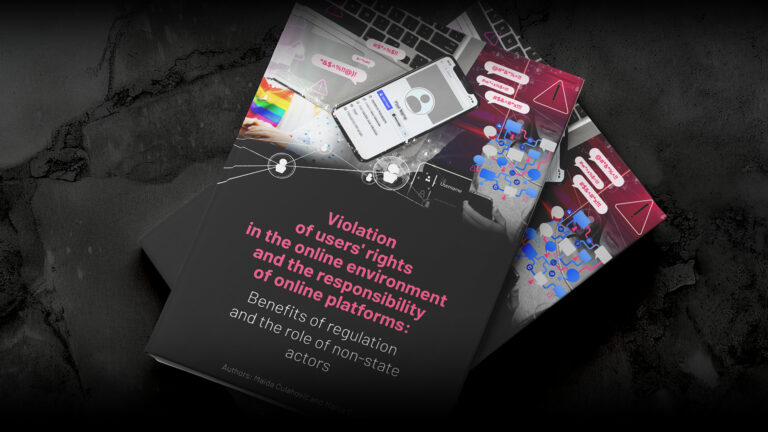
Photo: Zašto ne
Large online platforms today play a crucial role in shaping public discourse, access to information, and the exercise of fundamental rights in the digital space. User experiences from the Western Balkan countries show that non-transparent content moderation practices, ineffective protection mechanisms, and lack of platform accountability lead to systemic violations of rights, particularly regarding vulnerable and marginalized communities.
CA “Why Not” is publishing the publication “User rights violations in the online environment and the responsibility of online platforms: Benefits of regulation and the role of non-state actors”, which summarizes the experiences of civil society organizations, researchers, activists, and media from Bosnia and Herzegovina, Montenegro, and Serbia, with a special focus on the spread of harmful and illegal content online. The findings indicate that the existing policies of major online platforms in the region are applied inconsistently, while users are left without effective appeal and protection mechanisms. Detailed analyses of specific experiences, derived from a series of interviews with key actors, can be found at the following links: 1, 2, 3, 4, 5, 6, 7.
The publication also examines the potential offered by the European Union’s Digital Services Act (DSA) as a regulatory framework that imposes clear obligations on platforms regarding accountability, transparency, and the protection of fundamental rights. Special attention is paid to the role of civil society organizations and the academic and research communities in its future implementation, as well as the need to strengthen the capacities of these actors to participate in regulatory processes.
The goal of the publication is to contribute to a better understanding of the systemic risks that online platforms pose to democratic processes and human rights in the Western Balkans, as well as to encourage informed public debate and empower advocacy for a safer and fairer online space in the region.
You can read the publication at this link.
(Marija Ćosić and Maida Ćulahović, “Zašto ne”)